I was a bit scared of them, but I still got the selfie, such a Cliché 


Hello,
It is time for me to tell you more about my adventure in Australia and how my experience as an exchange student went. I hope my story won’t be too long.

Why I chose to go to Australia?


Well, I didn’t. I wanted to go to Spain to improve my Spanish and get the Erasmus plus grant ðŸ˜Š. A few days before applying for the exchange program, something happened in my brain, and I said: ‘you know we only live once, and I always wanted to go to Australia, so I am going to put Australia as the first choice on the application form’.
To be honest, I wasn’t expected to be chosen since there were only 2 spots available in the whole university. But, against all the odds, I was picked to fill one spot. I was so happy that I ran across all university smiling and jumping like a crazy girl. I was happy for days, and no one could take the smile off my face. In a matter of days, everybody knew I was going to Australia. Some of my friends were a bit surprised since I always try to play it safe, truth is I like to take risks.

Before departure


After receiving all the documents from the university in Australia and signing them. I had to apply first for the insurance and then for the student visa, which was quite expensive. For both, I paid around 500 euros. When applying for the visa, I was quite anxious, mostly because I knew how strict they are regarding foreigners. I was lucky, and I received it soon after I applied for it.  I also bought the plane tickets and waited for the day to come.

The departure day


I am always scared of airport security, especially the Australian one. I watched a TV show called “Airport Security.” when I was still living in Italy, and I knew that they can be strict and harsh. I was terrified so I washed all my shoes and clothes so they can be clean, especially the shoes since I read that they should not have mud on them. I also avoided taking any food or drinks. I do not smoke, and I do not know how many packets of cigarettes you can take with you.
During the first flight, I was ok, it was short, about 6 hours and I chatted with a guy from Syria, that grew up in Qatar and studied medicine in Romania. I enjoy talking with people on the plane, they have crazy stories, and besides that, I talk a lot. Who knows me personally, knows what I am talking about, and look at how long this post is going to be. On the second flight from Doha to Sydney, I spoke with a flight attendant from Croatia, and we had some long chats, in between sleeping. The trip was long about 17 hours, and I had the impression that when we had only five hours, the clock was stuck to that time and it wasn’t going down.
After we landed, I started to panic, because I had another flight to catch in one hour and 30 min. Luckily my experience with airport security wasn’t like the one on the TV show, and I caught the second flight to Brisbane on time. I was alone on the seat, and I didn’t disturb anybody ðŸ˜Š, but when I arrived in Brisbane, the transfer driver was my victim, and I talked to him the whole time. I don’t know where I got all that energy from, after travelling for more than 27 hours and sleeping only 2 hours on the plane.

The adventure begins


Waking up in a new room, in a new city is always strange for me. I love it, and I always feel fresh. This time I was fresh and jet-lagged. Only after three weeks, I got used to the climate. I left Europe in February, during winter and in Australia I was hit by the heat of summer. I was also bitten by a fire ant during the first week. It was so painful that I thought it was a spider. Silly me to believe that ants can be harmless in Australia. I also discovered that on campus, we had strange species of birds that I never saw before, giant bats and almost no spiders. The university was like a small zoo, and I loved it.
During the orientation week, the University does a lot of events, you also get to know the lecturers and the university staff. I studied at the USQ, and I lived in the smallest campus, there were only two buildings.

University life


As a requisite from my Danish university, I had to attend four courses, since each one of them would give me 7.5 ECTS points, enough for me to complete my semester requisite. Talking with other students, I discovered that they rarely pick four courses, and they prefer to do 2 or 3 per semester. I was a bit sceptic, and I thought they just wanted to chill a bit and not be stressed. I was wrong; four courses require a lot of dedication and home study and work. Fun fact, I am an undergrad student, and I was supposed to pick undergraduate courses, which I did for three of them. One class that I chose was a master course, and I realise that too late, and I could not change it.
Overall the classes were easy and fun to attend, you can interact with lectures and debate at all time. Everyone is involved in the conversation and have a voice. Teachers are funny, friendly and try to do everything to help you. You can also see the mentor assigned for the class if you fall behind or write to the lecturer, and you will receive an answer right away.
On your student page, you have everything, from class recordings, video and audio, presentations, study materials. There is also a forum where you can interact even with online students. The faculty shares everything with the students, and I think being transparent is the most important thing.

Assignments


During the semester, students must complete three or more assignments for each course, which will contribute to their final marks. I had 12 assignments to complete, and it was, time-consuming and stressful. On the bright side, I improved my English, which is still broken but not like before😊.
Usually, the assignments are written essays or reports and quizzes. I had only two questionnaires, and the rest was written. Each assignment was longer than 10 pages, and I had to finish it in 6 days because each week, I had a deadline for one assignment.

I can say that luck was on my side because I only had to do two exams, one for the master course and one for the undergrad course. Each exam can be taken only once if you fail, you must retake the course. The exam is handwritten, and it lasts 2 hours and 10 minutes of perusal. The exams can be open book or not, but that doesn’t matter because you do not have time to open your book.
Before the exam, they give you some useful materials to prepare yourself. You can also contact the lecturer or mentor anytime if you have doubts.
I am proud of myself because I am a College student and I attended a University, and I passed all the courses.
Unfortunately, like always I procrastinated a bit during the semester, and I had little time to travel. About my tourist experiences, I will talk in another post, this one is getting way too long ðŸ˜Š. 

I was happy because I met beautiful people, especially two of my flatmates. This experience made me grow a lot. More than I thought, and I will do it again. If you genuinely desire something make use all your energy and strength to get to it.

If you have other questions, write to me, and I will answer them :).
Have a beautiful day:)!




Read More


Today I would like to promote this initiative that some young Italian volunteer has ideated. They try to help people with different types of disabilities to find different ways to express themselves through dance, music and drama. The purpose of this project is to help people to express themselves better using their bodies, emotions and help them to grow self-esteem. In the end, all the people involved in this project will create more shows. I think this project is awesome and we should always help each other as much as we can. There will always be someone that needs help and remember that everything that comes around goes around. Below you will find a better description of the project in Italian. I just made a small summary in English. 

Quando le arti si incontrano

Una realtà nata dall’incontro di quattro giovani volontari, legati da un’unica passione: l’arte a 3600
Tutto è iniziato con l’ideazione di un nuovo percorso culturale, mirato a promuovere l’inclusione sociale di persone diversamente abili, affinché possano sperimentare una forma di educazione culturale basata sull’analisi e la gestione di differenti linguaggi espressivi.

La compagnia teatrale si compone di un team dinamico, formato da un esperto per ogni disciplina: danza, canto, musica e teatro. Il progetto “Naturalmente Abili “ ha come intento educativo-formativo quello di creare una didattica di tipo laboratoriale, improntata all’operatività in cui ogni individuo diventa protagonista di se stesso e del proprio saper fare.
I laboratori proposti avranno una grande valenza comunicativa e pedagogica nella struttura dell’ Associazione ONLUS “CON PAOLA” ( sita a Marano Marchesato, CS). Attraverso la pratica teatrale, specchio di vita, gli utenti scoprono se stessi, le proprie potenzialità ed instaurano con il prossimo relazioni positive, di confronto e fiducia reciproca.

L’obiettivo finale del progetto è la realizzazione di spettacoli teatrali, frutto dei vari laboratori. Attraverso esercizi, giochi fisici ed espressivi orientati a lavorare sull’ascolto di sé (corpo ed emozione) in uno spazio condiviso e vissuto insieme ‘’all’altro’’, si guida l’utente ad una nuova percezione di sé nel mondo. Si è pensato di utilizzare il corpo come mezzo per comunicare ed esprimersi, rendendo la danza fondamentalmente unica. 
Attraverso il coinvolgimento di tutta la persona, offriamo la possibilità di esprimere ed esplorare la propria sensibilità emotiva, favorendo l‘autostima. Si lavorerà per sviluppare una tecnica di canto che permetta ai partecipanti di sviluppare una basilare conoscenza della propria voce, intesa come prima apertura verso il consolidamento di una personalità indipendente. Di fatto, la musica è uno dei pochi linguaggi in cui le differenze si appianano perché è di tutti e per tutti.

Associazione Onlus Con Paola

Via Morroni n.36
87040, Marano Marchesato (CS)
associazione@conpaola.it


Read More

Hi

Long-time, no see. I have to apologise for that :). Unfortunately, I underestimated the Australian University and the amount of work I had to do during the semester. I will tell you all about it in the next blog post. 

But now, let me tell you about one of my last assignments and how it disappeared from the USB drive. 
It was a lovely Saturday afternoon, I was working on my assignment from the library PC because it had a bigger display. The university PC reset itself after you log out and everything that you worked on, including internet searches is gone, so the next user will find a clean PC, and you will not have privacy issues. I was prepared, and I had a USB drive connected to the PC in which I was saving everything. Unfortunately, I was lazy, and I did not log in to my google drive to save the documents there. 

At some point, I got hungry, and I decided to go home and eat, I safely disconnected the pen drive, and I left. One hour later I came back, connected the pen drive, and the computer shows a warning saying that the pen drive is corrupted and I did what I always do in this cases, I "repaired it". After it got repaired, I opened the folder, and I discovered that my assignment was gone. I had two-thirds done and my 3 days work was gone, it was Saturday afternoon and the due day was Monday. 
I panicked like never before, and I started looking online for programs that can help me recover the lost word document. I found two, but they were useless. The IT office at university was closed, so I was desperate, I called some friends, but they also had no clue what to do. 
Luckily I remembered that at the shopping near the campus there is an IT shop that has qualified technicians. I rushed there with my laptop, pen drive and hope. It took me a while for me to explain what happened because I was panicking, and in the end, I told him I lost a document from the pen drive, and I would like it back. 
I cannot be more grateful to this guy because he was honest and told me: "I do not know if this will work for your problem, but we have this programme, and I can try to recover the document using that".  I was ready to say yes, go for it when he told me that this would cost me 89 AUD + 29 AUD for his assistance. At that moment I started thinking that I will be fine, I will work for the next 48 hours without sleeping and I will finish it. But it wasn't a good idea since also all my research and sources were gone. 
I said to him that I am a jobless student and if he can find me a cheaper alternative. He was also a really good person and told me that he can download the free version on my laptop, and I agreed to that. He installed this life-saving programme, called RECUVA, that I will never uninstall and I will cherish forever. He ran the programme, and my assignment was saved. 

RECUVA is the tool that saved my life at that moment. My laziness cost me 29 AUD, and I was not happy, but since then, I try to save documents in multiple locations and devices. 
It is useless to say that I wish you to do the same, save your documents and your work, on clouds, ped drive, send it as an e-mail to yourself to make sure you will never lose it. But if something similar to my experience happens, you can use RECUVA. It can save your work, and the free version works just fine. 

Probably you are curious what grade did I get on my most expensive assignment. Well, it went surprisingly well considered that it was a master course, and I am a bachelor student. I got 94.50/100.
I was lucky, and I had a happy ending, and I hope this tool can help you too. 


Read More

I am one of those people that let themselves carried by the wind sometimes, and I let everything to destiny or fate or whatever. Sometimes (rarely) I feel like going out of my comfort zone, but it is not easy because like you and many other I fall into the routine and is so difficult to get out. It is like everybody hates it, but nobody does something to get out of it. But when I finally decide to get out of my comfort zone, I go big, well kinda.

Since the university offers the opportunity to do a semester abroad, I decided to go for it. I was planning to stay in Europe, so I can get Erasmus plus, obviously and enjoy the experience maybe without working. I was planning to go to Spain and attend the classes in Spanish and learn it at a mother tongue level. But things didn’t go exactly that way. I was thinking about Spain for months, planning everything, searching for apartments and one week before the deadline for the exchange semester application I started to think about Australia because I saw it on the list with the options. When I sent the form, I put Australia as the first priority, and then the other countries, South Korea, Spain, and Austria, just to be sure I will get somewhere. I really didn’t want to stay another semester in Denmark. I had to wait a few weeks, and then the big news arrived, first to my classmates, and they were super happy. But 10 min after they received the news, I also received an email saying that I was eligible for Australia and they offered me a spot. I was soooo happy that I ran all around the campus with a freaky smiling face.

Long story short, I got the visa (expensive AF), plane tickets and I also think I have a place where to stay. Next semester I am going to be in Springfield, Australia. BTW if you hear someone yelling is me, I saw a spider or another creepy creature.

Often life surprises us, sometimes positively or negatively but it is up to us to adapt to the new plan and to never give up. We need to let ourselves do mistakes and wrong to learn and grow. We do not know what might happen the next day and our plans might get ruined. Be bold and do everything with the same energy and motivation that you were supposed to put in your scheduled programs.


Do not be scared by the unexpected, embrace it if it’s positive or kicks its ass if it’s negative. 
Read More
I discovered a new culture, food, and traditions- I haven’t adapted to everything, but hey I am human so bear with me 😊
I learned to be independent – before I always lived with my parents and this as my first alone experience.
I started to speak 4 languages daily – let me tell ya, it is exhausting, and you can easily make mistakes and have blackouts.
I spoke more Spanish than Danish 😊 – I talk every day with my friend Adriana.
I am making money 😊 – well sort of, I have to pay rent, bills and food and other stuff but I have been able to economically sustain myself without depending on my parents, and this is great.
I went on a road trip with my lovely friends, Jurgita and Mike from Denmark to Italy.
I lost my curly hair – noooo this is a tragedy, I do not know how this happened but this summer something changed in my body, and now my hair is lifeless, flat and almost straight.
I started to walk more and more and more 😊 – when I was living in Italy, I was walking max 8km per day, now I am walking more than 15 km daily.
I found a cool part-time job, learned some new things and became more confident.
I started to go to the gym and put some effort – I cannot see the significant results yet, but I am working on it.
I also become more depressed during winter, when the days are shorter, and there is no sun, but as soon as the day is sunny, my mood goes up.
I am super happy and full of energy in summer when the day starts at 4 am and ends almost at midnight
I opened this blog and believe or not people are reading it, and some of you actually came to study at my University, the rest went to Odense, Copenhagen, Arhus, and other cities.
A lot of other things have happened some good, some bad but the most critical part is to keep going, fight everything and everyone that comes into your way and try to stop you from reaching your goal.
Since I moved to Denmark and I lived here for 2 years, I had fun, I learned a lot, I met a lot of people, but now it is time to move forward. Guess where 😊 you will find out on my next post…


Read More

In 2016 I was so happy to come and study and live in Denmark, but after 2 years and a half, things have changed, and I cannot wait to leave this country.

Before Denmark

When I looked for information online and found pictures and read stories and articles, everything seems so positive, and I started imagining how my life would be in Denmark since in Italy I had no future. I also found less positive experiences, but I thought that those were isolated cases, and maybe people were exaggerating. I was overexcited that I could study for free that I wasn’t processing other information.

After my arrival in Denmark

When I arrived in Denmark, I was so lucky to have friends that supported and helped me, and I am going to be forever grateful to them for this. I hope that someday I will be able to change their favor. I was lucky to live close to the university, and during the first semester everything went smooth, and I liked the programme and the teaching method. The exam period was a bit stressful, but everything went more than fine.

Before Christmas I also applied for a marketing related job and just before Christmas Eve, I discovered that the job was mine. I worked in Trendhim since then, and I am so lucky to do this experience during my school years.  I was also surprised to discover that besides offering free education, the Danish government also offers economic help to EU students that work more than 44 hrs per month. I chose to apply to receive help, and I got it.

My experience with the Danish language school

I forgot to mention that since my arrival in Denmark I also started the language class to learn Danish and to become part of the society. During the second semester, I had to give up on the language classes due to time issues. I had lessons twice a week from 5 pm to 7.50 pm, and it was pretty difficult to manage my time with the university and the job. I mover the classes to Saturday morning from 9 am to 1.30 pm, but this didn’t work either. We also changed teachers, and the new ones weren’t engaging. I had to give up on something, and I decided that this would be the Danish classes.

When everything started to fall apart

During the 4th semester, we had to do a 3-month unpaid internship, and I was fine with it. Nowadays it is normal to have unpaid internships because people need to build careers and make experience working full time, but nobody asks them how they pay rent or buy food. I was ok because I still had a part-time job that I decided to keep during the internship period to receive help from the government and have an income.

Please notice that with only my salary after taxes (salary 2900 dkk) I pay the rent (rent 2850 dkk + laundry 50 dkk) and that’s it, then with the help from the government, I can live through the month. I try to be as honest as possible with you.

Since the first week I started to feel tired, I was working 11 hrs in front of the pc and walking 10 km (I suffer from car sickness and I use buses, trains and cars only in extreme cases or when necessary). During the 2nd month, I took one week of vacation from work in order to focus only on one thing. It worked but by the end of the internship, I was physically and mentally exhausted. During this period, I also had to write the bachelor project 😊.

Since I had pain everywhere, I decided to go to the doctor for the first time since I came to Denmark. Worst experience ever. I cried after I walked out, I couldn’t imagine how a doctor can speak like this to a patient.

I have a small issue since I was born, one of my legs is bigger and stronger and this causes pain to my back, legs and feet. I live daily with the pain but when it was too much, I decided to book the appointment.

The doctor seemed nice when I went inside, and I started to describe my history since it was the first time that we met. She also measured my leg and saw the difference was significant between the 2 legs and I was hoping she will send me to an orthopaedic but no she said that a physiotherapist would be enough, and I should look for it on google. I was like ok but can I also have some blood analysis to check why I have so much inflammation in my tendons and she said to me that this is not possible for Romanian and Polish students, because our national insurance doesn’t cover the cost in DK. I immediately stopped her and told her that actually I am registered in Italy and with Romania, I have no ties. Then she changed her answer by saying that I was too young for blood analysis that I am healthy and in Denmark, they do not prescribe blood analyses for people as young as me. I immediately left and called my mum and said to her to book a visit to Italy ASAP. I went back to Italy and my doctor ordered a full check-up and she gave me some medicine to fight the tendon inflammation and the blood analysis shown some worrying news and I had to take some other medicine.

In autumn the problem returned, and I went again, this time I met another doctor and he sent me to an orthopaedic surgeon, that told me that the tendon is not inflamed enough, it is shorter than the one in the right leg and if the pain and issues persist, I should come back in one year to do a surgery and then he sent me away.


This was my awful experience with the Danish healthcare system, and I know that out there are cases worse than mine. Unfortunately, I decided that I cannot stay in a country that treats patients with superficiality, especially if they are foreigners. Since my problem might get worse, I prefer to live in a country when I am sure I will receive some sort of attention and cure.

 And yet another reason

But this negative experience is not the only reason why I decided to leave. Denmark is a rich country that offers many possibilities, but its people culture is not for everybody. Everything depends on the city you live in, the bigger the city the better. People are closed sometimes, and it is difficult to approach them and create a friendship. I am lucky to have many international friends. I do not socialize as Danes do and that is why I will not stay here longer than needed.


I contributed to the society in these 2 and half years, by working and I also received a lot and for this I am grateful, but I have to change chapter in my life.


Read More
I wish I can write this post and bring good news as always, but unfortunately this time I have to deliver some worrying news for future international students: Danish government decided to cut the number of international students that can be admitted to Danish universities.

When did this start and why?

The truth lays in statistics, and they show that only 1 out of 3 international students will stay in Denmark for more than 2 years after they graduated. This is a loss both for companies and the national workforce. Since 2017 universities were asked to limit the number of international students and accept about 25% fewer students. I can personally confirm the news since this also happened at my university. In 2018 the situation worsened and, many universities had to change the language of their courses from English to Danish, and many classes were canceled.
To be honest, I noticed this also in 2017 when I started to look for a top-up course to continue my bachelor. The CBS wasn't offering any top-ups related to my degree in English last year, and ultimately I decided to stay at my current university, Via University College.
The big problem is that from now on Denmark will be able to welcome fewer students every year, but there are also people that think this is not the best solution since it will reduce the diversity of international environment both in universities and workplaces.

After some quick investigation, I found some interesting information that I would like to share with you, and I think the Danish government has a point in deciding to reduce the number of international students.

"– Newly educated graduate students are the group who contribute most to the Danish economy out of all English-language students
– On average, international students are believed to contribute 100,000-350,000 kroner each to the state coffers over a lifetime
– On average, it takes about nine years for an international student to ‘repay’ their investment by the Danish state – but about 50 percent are gone five years after commencing their studies
– Only about 33 percent of international students contribute positively to the state coffers – the rest are seen as an expense for Denmark." 
(source: CPH Post)


What can you do to increase the chances of being accepted at Danish universities 

If you what to study in Denmark, you have to understand that the competition to be admitted to Danish universities will be higher than ever. The useful things that you can do are try to get the best results in school and a high score at your final exam. The language certificate is also very relevant, and I suggest you choose between TOEFL and IELTS and try to reach a level equal to a C1, this will give you an advantage. 
Another thing that you can do is to apply to multiple courses and universities and then rank them based on your preferences, this will increase the possibility of being accepted. 


Read More
this picture was taken by Alessia, you can read her story here
Hi, 

I know I have been absent for quite a long time, but I am back, and I am ready to tell you the reasons that brought me to Denmark.
As you can see I also decided to write in English, so all my friends can understand what I write. My mom will probably hate me for this because she doesn’t understand English ðŸ˜Š oopsie. Let’s get back to the main topic “Why did I choose Denmark”.There are two reasons behind my choice, the first one is related to the economic aspect: Denmark offers free education to EU students. As soon I discovered this I was beyond excited and obviously, I didn’t realize that I will have to pay rent and expenses and food. Italian universities are not that expensive but, studying for free is awesome so I decided that studying in Denmark was my goal and dream. If the education was thought in Danish I wouldn’t’ve come, because Danish is not an easy language. Fortunately, there are many courses thought in English, and this was the second reason.
When I knew that I was accepted I was ready to make sacrifices and work to pay for the expenses so I would not depend on my mum. When I was in Italy I worked for 6 months for an exhibition and I was able to save some money. I knew that in the beginning I had to pay more money for the deposit of the apartment and the first rent and I wanted to be ready.

After a few days in Denmark, I discovered that EU students have another big benefit which consists of a monthly allowance that you can get if work at least 12 hours per week. This was a big news and as soon as I had all my documents ready I started looking for a job.  The monthly allowance is called SU and you must apply to get it. If they approve your application, you will receive it monthly until you work and respect the requirements and its value is approx. 6000 kr before tax.  
Last but not least the education system, which I find it to be unique and not comparable to the Italian one or the Romanian one which is definitely outdated. Teachers are awesome, and you can have informal conversations during or after classes and they expect you to participate in the lesson. As a student, you are not stressed at all, but teachers have some expectations, such as reading the chapters from the book and being prepared during classes. The good part is that you will know the schedule for the whole semester and you can easily make plans.  
These are awesome reasons to study in Denmark and I think I made the right choice. I would suggest you come to study in Denmark, because of the benefits but also the experience is unique, and you can grow a lot.


Read More

Quando si decide di vivere in un paese straniero si deve prendere in considerazione che in quel paese si parla una lingua diversa rispetto alla propria lingua madre. La conoscenza dell’inglese è fondamentale per viaggiare, lavorare e studiare all’estero ma non è sufficiente. La Danimarca è un paese bilingue che ha come lingua ufficiale il Danese e come lingua secondaria l’inglese, infatti circa l’86% della popolazione danese parla l’inglese. Posso confermare che anche i più anziani hanno una conoscenza molto buona dell’inglese.

La mia esperienza con la lingua danese


Dopo aver ottenuto la residenza e la Yellow card ho deciso d'iscrivermi al corso di lingua danese serale, che ai tempi era gratuito. Tutto sembrava proseguire per il meglio, frequentavo il corso 2 giorni alla settimana, il martedì e giovedì dalle 17 alle 19.50. All’inizio gli orari non mi pesavano tanto, ma con l’arrivo dell’inverno era diventato più difficile, soprattutto perché le ore di luce diventavano sempre più poche. A gennaio ho trovato un lavoro part-time e diventò sempre più difficile dividermi tra università, lavoro e corsi di danese. Fu così che decisi di cambiare i giorni e andare solo il sabato. Fu una scelta sbagliata anche perché mi dimenticavo completamente del corso oppure ero troppo stanca per andare e seguire 5 ore di danese.

Qualche settimana dopo, ho abbandonato il corso anche perché non sentivo nessuna affinità con la lingua e il non avere amici danesi con i quali esercitarmi ha influito molto anche sulla mia motivazione. Inoltre, non ho intenzione di continuare a vivere in Danimarca dopo gli studi, per varie ragioni che spiegherò in un post futuro.

Imparare il danese: consigli e informazioni


Innanzitutto, vorrei dirti che la lingua danese non è facile da apprendere, non perché i vocaboli sono difficili da ricordare o la grammatica è complicata, ma perché la lingua scritta e parlata sono come due poli opposti di una calamita, non si possono incontrare 😊. Le parole vengono scritte in un modo e pronunciate in un modo diverso, e ogni persona le pronuncia a modo suo. Conosco anche altre lingue e ho notato che ci sono moltissime somiglianze con altre lingue europee, come per esempio l’inglese il tedesco e anche l’italiano. Strano ma vero anche i danesi utilizzano la parola ‘influenza’ allo stesso modo che in italiano, e sorprendentemente si scrive allo stesso modo. 

Tornando a parlare della scuola di danese, tengo a menzionare nuovamente che non è più gratuita e si deve pagare un deposito di 1250kr, che verrà restituito una volta completati i moduli. I moduli da completare sono 6 e ci si impiegano circa 3 anni per fare ciò. Al termine dei 3 anni si ha una conoscenza buona del danese, ovviamente dipende da quanto decidi di impegnarti e da quanto usi la lingua.

I corsi sono serali, solimante dalle 17 alle 19 due volte alla settimana oppure il sabato dalle 9 fino alle 13.30. All’inizio si fanno più ore e in seguito l’orario giornaliero si riduce di un’ora. 
I docenti e il loro metodo d'insegnamento influenzano molto il tuo percorso, se per esempio non sanno coinvolgerti non ti sentirai mai attratto da questa lingua e ti semprerà complicata. Solo il mio primo docente era a mio parere dedicato, gli altri ci davano esercizi dal libro oppure puntavano solo sulla grammatica e niente vocaboli. 
Devi capire che frequentare un corso di lingua richiede impegno e costanza, il danese non è una lingua facile e ti dovrai armare di pazienza e volontà.

Personalmente ti consiglio di vedere i tuoi obiettivi futuri, e se desideri vivere in Danimarca e lavorarci, il danese è indispensabile, anche se ci sono anche lavori che non ne richiedono la conoscenza. Il danese ti servirà per comprendere meglio le leggi, comunicazioni che ricevi per posta e tante altre cose. Se invece vuoi solo completare gli studi universitari e andartene sta a te decidere se vuoi apprendere una nuova lingua o meno. Segui con attenzione le tue priorità e non accumulare troppi impegni altrimenti non riuscirai a compiere i tuoi obbiettivi al meglio.


Il mio consiglio è quello di aspettare un semestre, nel quale di sicuro avrai conosciuto di più il paese e avrai capito se vorrai restare per un periodo più lungo in Danimarca. Non prendere mai decisioni affrettate, potresti pentirtene più tardi 😊
Read More


Oggi vorrei raccontarti ciò che è accaduto nei miei primi giorni all’università in Danimarca 😊.  Vorrei dirti che io ho un grande difetto: l’ansia. Quest’emozione mi travolge sempre qualsiasi cosa io faccia e non riesco a reprimerla. Non sapevo come sarebbero stati i professori oppure i nuovi compagni di classe e ovviamente avevo paura di isolarmi e non comunicare con nessuno. Tutto ciò che sapevo, era che i primi giorni erano introduttivi e avevamo un mentore che ci avrebbe accompagnato durante questi giorni e durante il semestre.


Nella prima parte della giornata eravamo tutti riuniti nella palestra dove i vari docenti si presentavano e ci introducevano il programma e ci davano altre informazioni utili. Sono passati 2 anni da quei giorni e non ho tantissimi ricordi. In seguito, il nostro mentore ci portava in un’aula e facevamo delle attività e giochi per conoscerci meglio. Non ho fatto subito amicizia con le persone, dato che sono sia amichevole ma anche riservata.

La cosa che mi ha sorpreso e che non solo abbiamo ricevuto la carta universitaria il primo giorno ma anche i documenti necessari per richiedere la residenza e la Yellow card. Dopo qualche settimana, il rappresentante del comune sarebbe venuto all’università per ritirare i documenti. Avere tutti i documenti necessari dura circa 7 settimane e in questo tempo non si può cercare lavoro o fare un conto in banca, ma di questo parlerò in un post futuro.

Durante questi giorni ci siamo divertiti e abbiamo appreso che il mentore ci avrebbe accompagnato per tutto il semestre ed essendo esso stesso uno studente del terzo semestre ci avrebbe guidato e appoggiato durante il semestre. Ovviamente erano preparati per le nostre domande e organizzavano degli incontri regolari durante il semestre.


Spoiler alert!! Gli studenti del terzo semestre possono diventare mentori e vengono pagati circa 16 ore. Non conosco tutti i dettagli perché ho dimenticato di inviare la domanda per diventarne uno entro la scadenza 😊
Read More


In Danimarca il trasporto pubblico è efficace e puntuale. La puntualità è la principale caratteristica che mi ha sorpreso, i treni sono nel 90% dei casi in orario. In Italia vivevo in Lombardia e Trenord è sempre stata una delusione, treni in ritardo di 5/10 minuti a tutte le ore, oppure cancellati. Per 5 anni ho preso il pullman per andare al liceo e non c’è stato un giorno nel quale il pullman ritardi, invece in Danimarca i ritardi sono sporadici.

Spesso il problema non sono solo i mezzi stessi ma anche comprare il biglietto, infatti se il bar o la stazione erano chiuse oppure la macchinetta dei biglietti era rotta si doveva viaggiare senza biglietto, cercando il controllore o comprare il biglietto dall’autista stesso. In Danimarca invece, i biglietti si possono acquistare tramite applicazioni che si possono scaricare sul proprio smartphone. 
Il pagamento si può fare tramite carta oppure mobilepay. I biglietti per il pullman si possono acquistare direttamente sul mezzo senza alcun sovrapprezzo.  Nel caso in cui devi fare un abbonamento mensile, cerca di documentarti il più possibile sui vari siti per cercare l’opzione più conveniente.

Di seguito troverai i link alle applicazioni più comuni per trovare informazioni su treni e pullman:
DSB -  sul loro sito e sull’applicazione potrai trovare informazioni su orari e prezzi dei biglietti dei treni in Danimarca.
Midttrafik e Rejseplanen – puoi utilizzare queste due applicazioni per organizzare il tuo viaggio in pullman. I biglietti si possono acquistare su midttrafik.

Ora vorrei parlarti dei metodi per risparmiare sui biglietti dei treni e pullman.  Ad essere sincera non utilizzo quasi mai i mezzi pubblici, solo in rari casi e tutte le informazioni che trovi in questo post sono basate sulla mia esperienza personale e su quello che hanno sperimentato i miei amici.
Per quanto riguarda gli sconti per i biglietti dei pullman so che si può richiedere una carta dei viaggi chiamata Rejsekort, che garantisce degli sconti. Personalmente non ne ho mai fatto uso e ti consiglio di cercare più informazioni sul loro sito.

Fortunatamente ho viaggiato di più con i treni e ti posso dare qualche consiglio in più. Innanzitutto, i giovani dai 19 ai 25 anni usufruiscono di uno sconto del 25% sui biglietti dei treni. Se abiti sulla penisola e vuoi andare a Copenaghen senza spendere una fortuna ti conviene acquistare il biglietto Orange sull’applicazione DSB. In realtà non bisogna cercarlo, se è disponibile comparirà come opzione di acquisto, se invece non è disponibile sarà visualizzato il biglietto normale.

Nota bene!! Per poter usufruire di alcuni di questi servizi potrai avere bisogno della yellow card 😊

Per quanto riguarda i viaggi in aereo tutto dipende da quando tempo prima prenoti il volo e quindi non ti posso aiutare molto. Ti posso dare qualche consiglio su come muoverti verso gli aeroporti. Per esempio, raggiungere la capitale e anche l’aeroporto è costoso e se non si trovano i biglietti Orange il prezzo del biglietto di sola andata è molto alto. Le alternative sono Gomore oppure Flixbus. 

Ovviamente ci sono anche gli aeroporti sulla penisola come per esempio Billund. Purtroppo, Ryanair, che fa voli diretti verso l'Italia, ha deciso di non effettuare voli verso l’Italia da ottobre fino a marzo.

Se ti devi muovere dentro la città puoi tranquillamente usare la bicicletta, le piste ciclabili sono ovunque 😊.


Spero che i miei consigli ti siano stati utili 😊
Read More
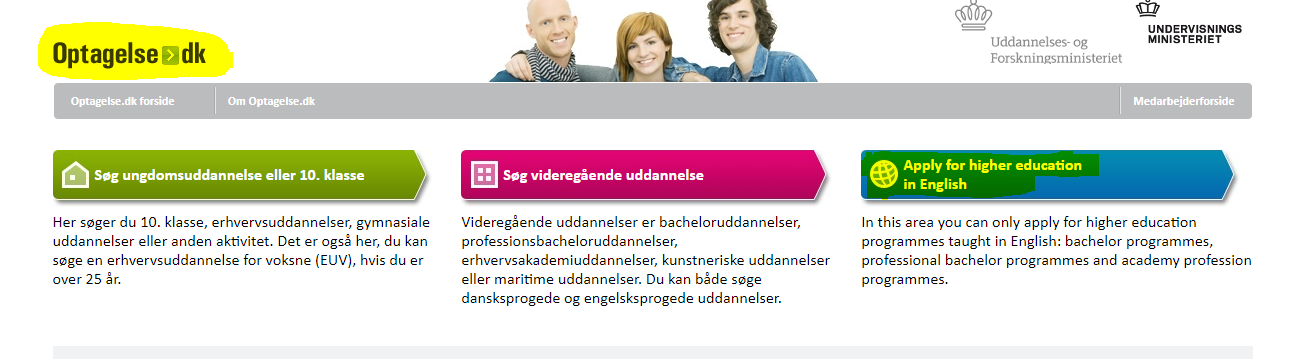
Quando ho deciso di iscrivermi la prima volta alle università danesi ero molto entusiasta e non pensavo fosse così facile. Come menzionato in un post precedente, l'iscrizione avviene online sul sito optagelse.dk  . Le iscrizioni aprono ogni anno il primo febbraio e si chiudono il 15 marzo. 

ATTENZIONE! Il 15 marzo non puoi più fare domanda alle università ma se lo hai già fatto puoi accedere e caricare i documenti mancati entro il 5 luglio.

Di seguito ho realizzato alcuni Screenshot e spiegherò i passi che ho seguito io e che devi seguire anche tu. 

La prima cosa che si vede quando si accede al sito è la schermata sottostante e devi cliccare sulla scritta evidenziata. 


 Nel prossimo screen puoi vedere che ti chiede il CPR-number, cioè una sorta di codice fiscale danese, che ovviamente non hai ancora e quindi devi cliccare NO

 In seguito ti chiede la tua mail, e ti consiglio di dare una mail che usi spesso perché lì riceverai il link per accedere al tuo profilo.

 Come puoi vedere questo è il mio profilo, nel quale devo aggiungere ulteriori dati. Ho evidenziato la scritta CPR-number perché, viene generato un numero provvisorio composto da cifre e lettere.
La seconda scritta evidenziata ti chiede se sei già stato iscritto ad un'università nel tuo paese d'origine.
 In questo screen sono andata a mettere le mie qualificazioni. Fino ad ora tutto è stato molto facile e sono sicura che non hai avuto bisogno di alcun aiuto o suggerimento. Personalmente è stato qui che ho incontrato il primo ostacolo, non sapevo se scegliere "International Baccalaureate" oppure "Non-Danish exam". Personalmente ho scelto non danish exam ma tutt'ora non so se sia giusto o meno. Qualunque scelta farai guarderanno il diploma di maturità in allegato. Consiglio personale, scegliete il Baccalaureate :)
Se scegliete il Non-danish, potete sempre scegliere sotto il Baccalaureate. Ovviamente ti chiede l'anno nel quale hai ottenuto il diploma, oppure nel quale lo otterrai.
Qui invece devi scegliere l'università o le università alla quale vuoi fare domande e creare una lista e classificare le università in base alle tue priorità. Io per esempio ho fatto domanda a 6 corsi di laurea in 4 università diverse.
Qui ha diverse possibilità di ricerca e troverai tutti i corsi disponibili, e anche la città dove si svolge.
Qui ho cliccato sul nome del mio attuale corso e si apre la descrizione. Ho evidenziato i punti ai quali devi fare attenzione e leggere bene
Quando ho selezionato il corso, sono andata alla pagina dedicata nella quale ho dovutoaggiungere alcuni dati, riguardanti la mia esperienza lavorativa, i miei certificati, diplomi ecc.
Una volta completata la domanda per il corso di laurea, si riceve un documento chiamato 'SIGNATURE PAGE'. Questo documento va firmato e inviato all'università entro il 15 marzo (consiglio utile: al posto di stampare e firmare il foglio a mano potete, con adobe mettere la foto della vostra firma a mano).
Grazie alla Signature Page l'università può accedere al vostro profilo su optagelse, quindi è importantissimo inviarla all'università prima del 15 marzo, altrimenti l'iscrizione su optagelse non ha alcuna valenza.

Spero che questa breve guida dei primi passi che ho seguito io ti sia stata utile.
Alcuni passi che ho inserito, sono basici e scontati ma ho pensato che sapere i passi seguiti anche da un'altra persona dia un po' più di sicurezza :).

Ti consiglio di contattare direttamente l'università se i tuoi documenti e certificati tardano ad arrivare. Sono tutti molto gentili e rispondo tempestivamente.

NON cancellare l'email con il ricevuto da optagelse.dk, ti servirà per accedere nuovamente al tuo profilo, ed è anche il metodo più facile e veloce.

In bocca al lupo :)


Read More
Oggi vorrei raccontarti un po' sul mio percorso stage in Danimarca. Attualmente sto frequentando il quarto semestre della mia AP degree, e durante questo semestre dobbiamo completare un periodo di stage in un'azienda nel dipartimento di marketing.

Il percorso stage dura 12 settimane e si devono completare un totale di 444 ore. Lo stage si può fare ovunque nel mondo, ma dato che sono solo 3 mesi ho deciso di completare questo percorso in Danimarca.
Ho fatto questa scelta perché non volevo, rinunciare all'alloggio o al mio lavoro per soli 3 mesi all'estero.
Per cercare lo stage mi sono affidata ad un ufficio che aiuta gli studenti e i cittadini a cercare lavoro e si trova all'interno dell'università. Ho accettato sin da subito la prima proposta che ho ricevuto perché mi hanno attirato le possibilità di mettere alla prova le mie capacità e conoscenze.

Ho deciso quindi di fare lo stage in una start-up che si trova all'interno dell'università stessa, quindi molto vicino a casa. La start-up si chiama Hang Products e opera nel mercato B2B, ed è composta da una sola persona Niclas, il proprietario e ideatore di Hang, un prodotto molto utile per chi ama la palestra.
Nell'azienda mi occupo di tutti gli aspetti legati al sito web, posizionamento, contenuti, social media e anche del reparto vendite.

Ho iniziato lo stage da 3 settimane e ho avuto modo di applicare tutte le conoscenze acquisite da Trendhim. Ho migliorato i contenuti sul sito, e del canale YouTube e ho lavorato anche sul posizionamento online. Anche se l'azienda opera nel mercato B2B, penso sia molto importante avere un sito web buono con un buon posizionamento.

Nelle prossime settimane mi occuperò anche delle vendite a livello internazionale, dato che non parlo la lingua danese :). Niclas è a carico del mercato danese.

Il team di Hang Products, da sinistra Niclas, io e Matej

Mi sono dimenticata di precisare che faccio lo stage assieme ad un mio compagno di classe che si occupa principalmente delle vendite, Matej. Quindi almeno per questo mese Hang avrà 3 dipendenti :).

La cosa più difficile è quella di conciliare il lavoro a Trendhim con quello a Hang. Quando ho iniziato lo stage ho deciso con Niclas che sarei andata un giorno a lavorare da Trendhim. Presto mi sono resa conto quanto stancante questo possa essere. Giornalmente lavoro 7,5 ore da Hang, e il mercoledì vado da Trendhim dove lavoro 10 ore. Il mercoledì mi sveglio alle 5,30 e arrivo a casa intorno alle 19, dopodiché crollo in un sonno profondo e spero che i miei compagni di appartamento non facciano così. Dato che devo lavorare 12 ore alla settimana, altri 2 giorni alla settimana mi sveglio alle 5.30, scappo da Trendhim, lavoro un'ora e poi vado da Hang dove, lavoro fino alle 17 circa. Non voglio assolutissimamente lamentarmi perché mi piacciono entrambi i miei lavori solo che è un po' stancante.

Vorrei precisare che ho scelto di fare il percorso stage perché volevo mettermi alla prova e sopratutto  tutto ciò che ho imparato da Trendhim e quello che appreso durante il mio percorso studi.

Scriverò un altro post al termine dello stage, nel quale racconterò molte più cose.

Alla prossima
 Georgia :)


Read More


Come menzionato in un post precedente dal 2016 studio marketing management in Danimarca, al Via University College e penso sia arrivato il tempo di raccontarti un po di cose sulla mia università. 

Quando ho presentato la domanda d'iscrizione, il corso di marketing di Via era al primo posto tra le mie preferenze, seguito dalla Business Academy, la Aarhus university e Aalborg university. Ho conosciuto Via grazie ad un'amico di famiglia che studia ingegneria meccanica e me ne ha parlato molto bene ma ora vorrei dirti il perché rifarei la mia scelta. 

Io studio nel campus di Horsens, che è anche il più internazionale, gli altri campus dove sono presenti corsi in inglese si trovano a Herning e Aarhus. 
La cosa che mi piace di più dell'università è la struttura, molto grande, con tantissimi spazi comuni, classi grandi e dotate non solo di lavagne ma anche di proiettori. il mio posto preferito è il tetto, dal quale si può vedere la città e il piccolo fiordo. 

Quali sono i corsi per gli studenti internazionali

Via offre tantissimi corsi in lingua inglese e la maggior parte sono corsi di ingegneria. Non spiegherò tutti i corsi di laurea perché la descrizione migliore si trova sul sito, ma ciò che ti posso dire e che tutti i corsi non sono solo teorici ma anche molto pratici, questo da la possibilità allo studente di essere preparato al meglio per il mondo del lavoro. Ovviamente alcuni corsi sono molto più impegnativi rispetto ad altri.
Ti lascio qui l'elenco dei corsi di laurea in lingua inglese con i link così sarà più facile trovarli. 

  1. VIA Architectural Technology & Construction Management;
  2. VIA Marketing Management - questo è un Academy Profession Degree di 2 anni e per completare il percorso di laurea si deve fare un top-up di un anno e mezzo. Se siete interessati a questo corso potete leggere l'intervista di Adriana e Jurgita
  3. VIA International Sales & Marketing Management - questo è uno dei top-up per chi ha fatto marketing management;
  4. VIA Value Chain Management;
  5. VIA Design - qui trovate tutti i corsi proposti dall'università. Anche in questo caso i programmi sono divisi in ap degree e top-up;
  6. VIA Civil Engineering
  7. VIA Global Business Engineering
  8. VIA Software Engineering - potete leggere le interviste di Mike e Sara 
  9. VIA Materials Science & Product Design
  10. VIA Mechanical Engineering - potete leggere l'intervista di Luca 
  11. VIA Supply Engineering 
Per poter chiedere più informazioni riguardanti i corsi, potete contattare direttamente il dipartimento, iscrivervi al gruppo facebook 'Keeping up with Via University College' oppure scrivere una mail a Helle (heys@via.dk). 

Ciò che mi piace e non mi piace della mia università

Come in tutte le università si trovano aspetti positivi e negativi, ma devo confessare che quelli negativi sono davvero pochi. Ecco alcuni aspetti positivi del Via University College:
  • L'università è aperta 24 ore su 24 per gli studenti, che possono accedervi tramite la tessera personale;
  • Si possono utilizzare tutte le attrezzature presenti nelle aule e non solo, come per esempio: proiettori stampati 3D, laser cutter, arduino (questi ultimi solo dopo aver ricevuto un patentino);
  • Ci sono anche sale prova che possono essere prenotate;
  • C'è un ufficio ict, che offre assistenza, e se il proprio computer si rompe, viene riparato gratuitamente e lo studente usa un computer sostitutivo. 
  • Tutte le lezioni vengono caricate sulla piattaforma personale dello studente, dove si può vedere anche l'orario, che viene organizzato per l'intero semestre; 
  • Tutti i programmi office e  altri software sono disponibili gratuitamente per tutta la durata degli studi; 
  •  Il rapporto con i professori è informale e quest’ultimi spronano costantemente lo studente ad esprimere le proprie idee ed opinioni;
  • L'iscrizione agli esami è automatica e non coincidono quasi mai;
  • Durante gli esami non vengono chieste definizioni, ma si deve applicare tutto ciò che si impara in teoria, come anche durante tutto il semestre e si possono utilizzare libri, appunti e internet (ci sono alcune eccezioni)
  • La biblioteca universitaria è aperta anche essa 24 ore su 24 in quanto ci si può accedervi con la tessera personale;
  • L'università ha un bar gestito dagli studenti chiamato Campus Café; 
  • L'università ha anche delle docce;
  • Gli alloggi universitari si trovano a 3 minuti a piedi dall'università o in centro città;
Gli aspetti negativi che ho riscontrato riguardano solo gli esami: 
  • Come menzionato anche sopra, l'iscrizione agli esami è automatica e quindi non si può scegliere la data;
  • Ci sono solo 3 tentativi per passare un esame dopodiché si può essere espulsi dall'università (ovviamente dipende dalle situazioni, se non studi sei fuori), la cosa positiva e che non esiste il fuoricorso;
  • Non si possono rifiutare i voti; 
  •  Alcune volte non viene dato alcun riscontro dopo aver fatto l'esame, nel mio caso per esempio, dopo aver fatto un esame scritto, non ho ricevuto alcuna spiegazione riguardante il mio voto, e i professori si sono giustificando dicendo che in passato, gli studenti ricevevano il riscontro ma non miglioravano e hanno deciso di non inviare più alcun riscontro;
Sono soddisfatta della scelta fatte e non tornerei mai indietro, spero solo di riuscire ad imparare il danese in modo tale da poter inserirmi al 100% nella comunità. 


Read More
Next PostNewer Posts Previous PostOlder Posts Home